Innovate. Research. Lead.

Integrative Psychoanalytic Couple Therapy

program overview

Deepen Your Skills with Couples

Novice and experienced therapists alike struggle with the many challenges of couple psychotherapy. Some couples can be helped by simply facilitating a dialogue between thepartners, but many others struggle with difficulties related to affect regulation, narcissistic vulnerability, feelings of rage or hopelessness, sequelae of trauma, and other issues which require much more of the couple therapist. This couple therapy program focuses on psychoanalytic theory to help therapists of all types. Psychoanalytic theory is uniquely suited to addressing the deeper roots of such difficulties; however, applying the theory to couples requires specialized training tailored to the unique demands of this modality. This program will address this training need.

Core Value

What Participants Gain

Our Master’s program is offered in a hybrid format designed for working professionals, combining online coursework with intensive in-person residencies and clinical practice experiences.

Psychoanalytic Depth

Apply psychoanalytic theory to the unique, deeper challenges of the couple modality.

Integrative Framework

Thoughtfully incorporate non-psychoanalytic models (EFT, Gottman, systems) into a core psychoanalytic practice.

Clinical Confidence

Navigate high-conflict dynamics, trauma histories, and complex relationship presentations with specialized, ongoing consultation.
Alumni Stories

What Our Graduates Say

The Integrative Psychoanalytic Couple Therapy Certificate Program was a level-up experience for me and my practice. My ability to navigate difficult cases with more authority and confidence increased greatly...
Todd Derrick Frugia
MFA, MA, LCPC
"Completing the program... expanded and enriched me professionally and personally. With the help of experienced teachers, I learned to work with couples more empathically and effectively."
Ying-Ling Liu
World-Class Faculty

Guest Lecturers

Guest lecturers are prominent experts in particular areas of couple therapy, most of whom have authored books and presented widely. 12 of the 28 classes are taught by renowned guest speakers, including Phil Ringstrom, David Shaddock, and Patricia Papernow, who are prominent experts in couple therapy and have authored widely on the subject. Lecturers to date have included:

Mona Fishbane

Magdelena Fosse

Peter Fraenkel

Rhonda Goldman

Arthur Gray

Martha Kauppi

Jamie Loveland

Heather MacIntosh

Jennifer McComb

Michael McNulty

Nadia Nieves

Patricia Papernow

Philip Ringstrom

Sara Schwartzbaum

David Shaddock

Marjorie Nightingale

Michelle Avigan

Program Quick Facts

Format
9 months, virtual, Thursday mornings, 9 AM - 12 PM CST
Start
Mid-September 2026
Scholarships
Available (BIPOC priority)
Tution
$3,600

Questions?

Please direct questions about the application process to admissions@icsw.edu

For eligibility questions, contact Dr. Carla Leone at cleone@icsw.edu or call (847) 328-3695

Milestones

Curriculum Roadmap

Explore our developmental phase-by-phase learning sequence designed to steadily build your psychodynamic diagnostic and treatment confidence.

Phase I

Basic Tenets

Overview of psychoanalytic couple therapy, transference/co-transference, and creating safety in the clinical space.
Phase II

Major Models

In-depth study of Object Relations, Self Psychology, Intersubjective Systems, and Relational Theory.
Phase III

Integrative Approaches

Incorporating systems, neuroscience, EFT, and the Gottman Method into a robust psychoanalytic work model.
Phase IV

Clinical Application

Applying theory to same-sex, multicultural, older adult, high-conflict, and traumatized couples in active treatment.
Competencies

Professional Capabilities Achieved

Explain and compare the basic tenets of major psychoanalytic approaches to couple therapy
Differentiate between psychoanalytic couple therapy and non-psychoanalytic models
Integrate non-psychoanalytic approaches into a fundamentally psychoanalytic framework
Articulate a personal theoretical orientation to couple therapy
Conceptualize couples from a psychoanalytic perspective, including individual dynamics
Apply learned theories directly to couples in active treatment
Pedagogy

Teaching Format & Program Components

A multi-modal educational strategy pairing structural seminars, group deliberation, and hands-on consultation.

Didactic Seminars

90 minutes of weekly lecture and discussion on major models and clinical applications.

Case Conferences

75 minutes of small-group case presentation, peer feedback, and deep clinical discussion.

Individual Consultation

10+ sessions with an expert psychoanalytic couple therapist throughout the academic year.

Capstone Paper

A 5–8 page paper articulating your personal theoretical approach alongside a clinical case illustration.
overview

Eligibility & Certificate Completion

Review core logistics, schedules, and structural outputs designed for working clinical professionals.

Program Dates
September to May
Format
Virtual / Online Learning
Schedule
Thursday mornings 9:00 AM - 12:00 PM CST (28 classes plus a dedicated wrap-up session)
Continuing Education
Up to 84 CE Hours available (earned across 28 rigorous three-hour classes)
Requirements

Eligibility & Certificate Completion

Understand entry baseline benchmarks and program criteria necessary to qualify for formal accreditation.

1

Academic & Professional Eligibility

Designed for licensed master's or doctoral-level clinicians, preferably with a minimum of two years of post-licensure experience. Also open to equivalent backgrounds (e.g. couples/family therapy, sexuality studies). Requirement waiver may be assessed on a case-by-case basis.
2

Active Clinical Practice

Enrolled practitioners must actively treat at least two clinical couples concurrently throughout the program duration to sustain direct supervision requirements.
3

Demonstrated Competence

Accreditation outputs require consistent attendance, robust class participation, active case presentations, and a finalized Related Experience Essay.
4

Inclusive Scholarships

Strategic priority is given to BIPOC applicants, traditionally underrepresented groups, and practitioners holding marginalized or historically low-income identities.

Program Quick Facts

$4600Total
Consisting of $3,600 standard academic tuition plus $1,000 for mandatory clinical individual consultations.
Payment plans available
Scholarship priority programs

Application Process

Personal Statement Submission
Curriculum Vitae (CV)
Individual Academic Interview
Rolling Admissions Policy
First-come, first-served. Limited availability to ensure academic quality. Max 12 students.

Questions?

Please direct questions about the application process to admissions@icsw.edu

For eligibility questions, contact Dr. Carla Leone at cleone@icsw.edu or call (847) 328-3695

Faculty

Faculty & Leadership

Carla Leone, Ph.D.
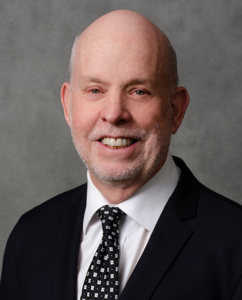
Carla Leone, Ph.D., specializes in applying contemporary self-psychology and intersubjectivity theory to couple, family, and individual therapy. She serves on…
Discover More

Art Nielsen, MD

Art Nielsen, MD, is a board certified psychiatrist, psychoanalyst and couple therapist. He is the author of two textbooks: A…
Discover More

Karen Bloomberg, LCSW, PhD – Dean Of Students

Dean Of Students
Karen Bloomberg, LCSW, PhD, is Dean of Students at the Institute for Clinical Social Work and, as faculty, teaches Self…
Discover More

Adjunct Clinical Consultants

All consultants are very experienced couple therapists and clinical supervisors who are offering their time at a reduced rate to support the mission of this program.All consultants are very experienced couple therapists and clinical supervisors who are offering their time at a reduced rate to support the mission of this program.

Eric Boone

LICSW

Dr. Karen Bloomberg

Ph.D

Denise Davis

LCSW

Robert Feldman

LCSW

Freddi Friedman

Ph.D

Heather MacIntosh

Ph.D

Caryle Perlman

LCSW

Peter Reiner

PhD

David Shaddock

MFT, PhD

Karen Skerrett

PhD

Shelly Smith-Acuna

Ph.D

Mark Winitsky

MFT, Psy.D